What is Sarcopenia?
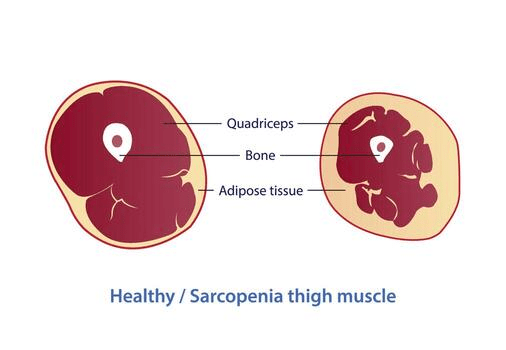
Sarcopenia is a condition where the mass of the muscles is lost or diminishing, leading to weakness and reduced ability to maintain balance and stamina. While osteoporosis may be seen as a silent condition, sarcopenia is not and is much more noticeable. As seen in the drawing below, muscle mass can become greatly diminished or atrophied. This can have a significant impact on bone health.
What are the common symptoms or signs of sarcopenia?
The common signs of sarcopenia, or age-related muscle loss, include:
- Muscle weakness and loss (a general feeling of weakness, loss of strength, and noticeably smaller muscles)
- Slowed movement (a slower walking pace and/or more difficulty climbing stairs)
- Decreased balance and coordination (greater risk of falls)
- Reduced stamina (tiring more easily during physical activity)
- Increased challenges with daily activities (trouble with movements like opening jars, carrying groceries, or getting out of bed)
- Fatigue (a constant feeling of exhaustion)
- Muscle Atrophy (a wasting or shrinking of muscles)
These signs can be an indication of the onset of sarcopenia. It is recommended to consult a qualified healthcare provider if you’re experiencing them.
Can muscles be regained?
Yes, fortunately, through certain exercises.
What are the best exercises for sarcopenia?
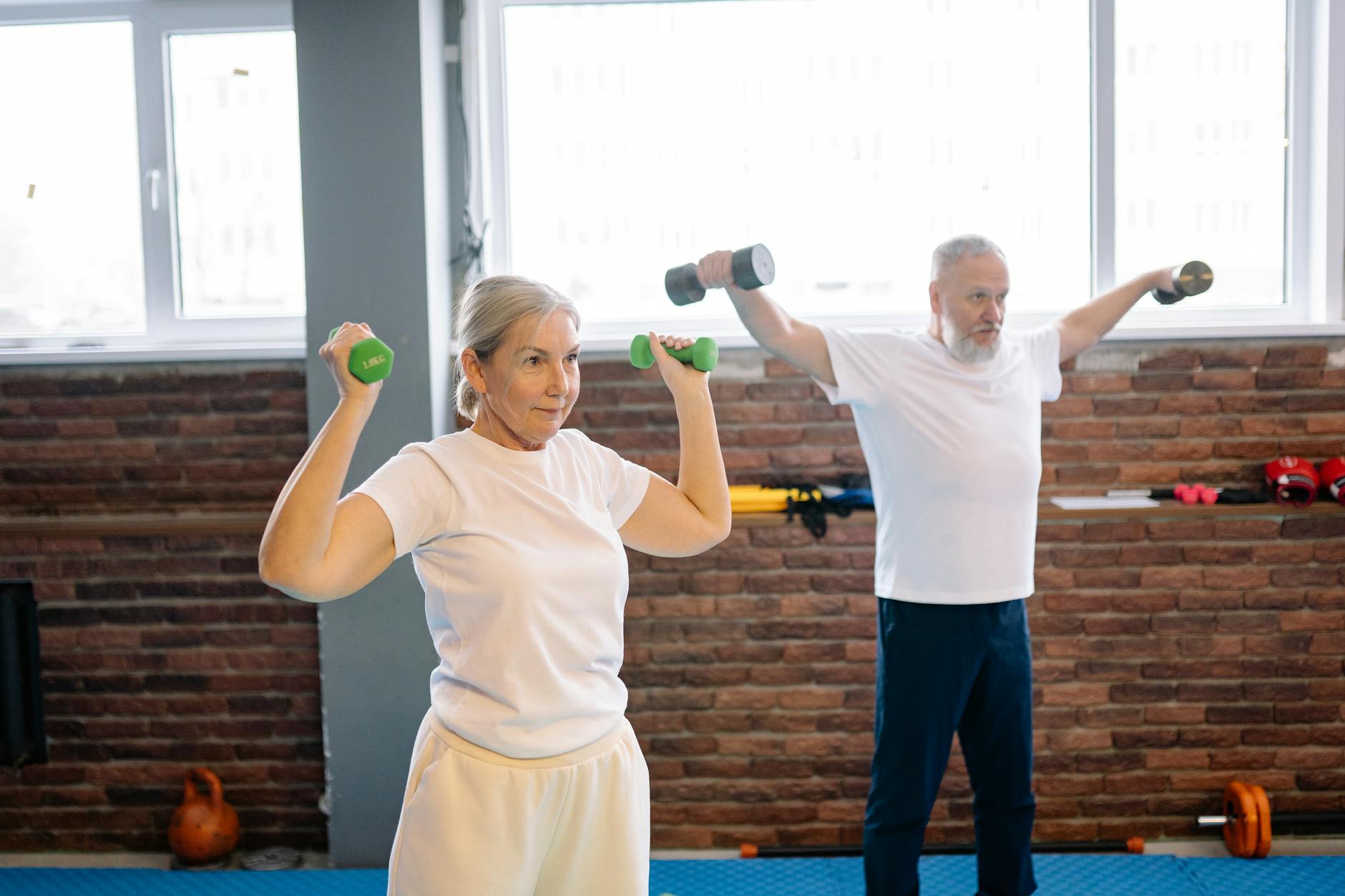
The best exercise for sarcopenia is, in most cases, a combined approach that includes the following:
Resistance Exercise: A focus on building muscle strength and mass, especially in large muscle groups.
Examples:
- Low-Intensity Resistance Training (LIRT): Uses lighter weights of 1-4 sets of 8-15 repetitions, 2-3 times a week. This is ideal for building endurance and muscle efficiency.
- High-Intensity Resistance Training (HIRT): This uses heavier weights to maximize increased strength. A goal of 60%-80% of a one-repetition maximum (RM).
Aerobic Exercise: Aerobic exercise enhances mitochondrial function, as well as muscle endurance and cardiovascular health. Suggested exercise plan:
Duration: 30 minutes per day, 3 times a week, for at least 6 months
Intensity: Start with low intensity (40% of maximum heart rate), progressing to moderate (50%-60%), and then high intensity (over 60% of maximum heart rate)
Examples: walking, jogging, cycling, swimming, dancing
Balance Training: Tai chi is a good exercise for balance. It reduces the risk of falls and improves overall muscle function. Ideal goal:
Frequency: At least 3 times a week
Examples: Single-leg squats, heel-to-toe walking, balance boards, or BOSU balls
Other effective options ¹
- Kettlebell Training: Energetic, full-body movements that improve muscle mass and strength
- Blood Flow Restriction (BFR) Training: Use lighter weights to achieve muscle conversion, reducing injury risk
- High-Intensity Interval Training (HIIT): This can improve insulin sensitivity, as well as muscle cellular respiration, and lean mass
It is important to tailor your exercise program to your individual needs and goals, considering muscle strength, functional ability, and health status. You might want to consult with a healthcare professional or (qualified) fitness trainer to determine the best exercise plan for your specific condition.
Those with osteopenia and more so, osteoporosis, need to build and maintain good muscle mass and strength to support the skeleton, to prevent injury from the loss of balance and falls, the primary cause of most breaks and fractures.
Remember: Healthy Bones Are Happy Bones!
[This is a page from “Opening the Doors to Reversing and Healing Osteoporosis”]
© Copyright Douglas K. Johnson 2026 (All rights reserved)
 Naturally Better Bones