Hormones
Hormones are needed by the body! Each cell and system in the body needs and uses hormones. We can’t live without them. But we need them in balance. We need them to be produced and distributed to their particular destination when they are needed and in full strength. Too much or too little of one or another can set things in motion, spiraling us into a chaotic state that can affect our health in many ways.
With hormones, it is just not healthy or safe to pump a bunch of estrogen, progesterone, or testosterone into the body, thinking it is going to resolve issues such treatments are designed for. I’ve personally seen some lead to serious side effects, such as conditions that can cause organs like the spleen to explode from an overbuild-up of too many red blood cells.
HRT (Hormone Replacement Therapy)
When it comes to hormones, the introduction of exogenous hormones is said to stop or hinder the production of those hormones by the endocrine system. We either stop making them or we become insufficient in them, causing an imbalance and possibly the permanent reliance or continued treatment, which can lead to other health issues. However, this can be corrected in most cases, though it can take up to six months.
With respect to osteoporosis and the health of our bones, exogenous Estrogen does not make bones stronger. As a matter of fact:
“Estrogen administration will cause a marked reduction in bone remodeling rates which may actually increase the risk of fracture.”(R. R. Recker, M.D., “Osteoporosis,” Contemporary Nutrition, Vol. 8, number 5, May 1983.) “Estrogen therapy carries a nearly tenfold risk of endometrial cancer (Associated Press, November 26, 1992)
According to Jean Marie Russo in writing for Better Bones,
Estrogen therapy isn’t an option for osteoporosis anymoreEstrogen Therapy Won’t Reduce Fractures, March 9, 2018/in Bone Drugs /by Jean Marie Russo
This was based on the fact that a previous study in 2008 showed estrogen therapy helped build bone density. The ACP guidelines “allegedly” supported estrogen therapy based on “high-quality evidence that estrogen therapy was associated with reduced risk for … fractures in postmenopausal women.” The problem was that the 2008 study was based on “postmenopausal women with low bone density, or on postmenopausal women in general, rather than those with established osteoporosis.” It was further stated that the “2008 evidence came from women who did not have osteoporosis.” The guidelines were changed in 2017. Ms. Russo says hormone therapy should not be used to treat osteoporosis. 1
In the article “Reversing Osteoporosis With Hormone Balance” on Hormones and Balance (dot com), Magdalena Wszelaki, in her blog, says, “age isn’t even the primary risk factor for osteoporosis – it can be a hormone imbalance or poor nutrient absorption.” 2 She goes on to say,
Promoting hormone balance inside our bodies should be the first step in preventing osteoporosis. Our body thrives on homeostasis. When one simple hormone or nutrient is imbalanced that sends a trickle-down reaction throughout our whole body.Reversing Osteoporosis With Hormone Balance by Magdalena Wszelaki 12-1-2020
The introduction of exogenous hormones can have devastating side effects that include: cerebrovascular accident, infection, malignant neoplasm of the breast, endometrium disease, headache, and mastalgia. Other side effects include abdominal pain, limb pain, pruritus, sinusitis, nausea, skin rash, and vaginitis. 3
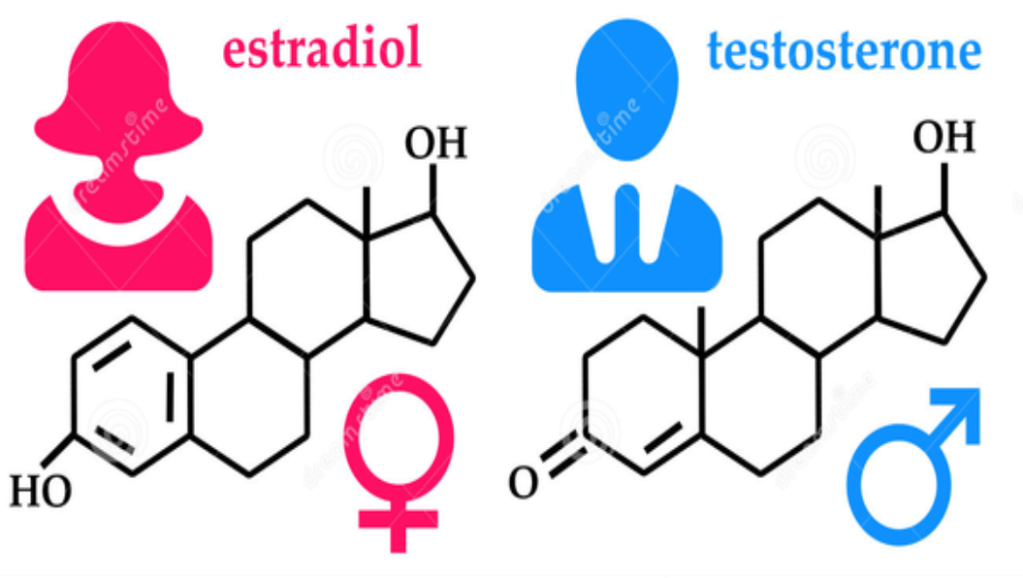
Hormone Replacement Therapy (HRT) is a method of introducing exogenous hormones. Thus, the introduction of (TRT) Testosterone Replacement Therapy is not better for men. DHT and Estradiol Normal metabolism of testosterone results in its conversion into two primary metabolites, dihydrotestosterone (DHT) and estradiol (E 2, a form of estrogen). Elevated levels of DHT can cause benign growth of the prostate, increased oiliness of the skin and acne, as well as male pattern balding. 4
Bioidentical Hormone Therapy (BHT/BHRT)
Some have been led to believe that Bioidentical hormones are safer and more natural, but this could not be further from the truth, according to some experts.
Dr. Josh Axe says,
While hormone therapy might be better than some other standard medical options, bioidentical hormone replacement therapy is not the ideal treatment approach either.
My advice is that in most cases BHRT is not necessary.Benefits & Risks of Bioidentical Hormone Replacement Therapy, Dr. Josh Axe/ By Jillian Levy, CHHC
November 10, 2016
Some common side effects of BHRT may include: acne, bloating, weight gain, fatigue, mood swings, and increased facial hair in women. Others may include digestive issues from diarrhea to indigestion, as well as energy loss, foggy thinking, night sweats, hot flashes, problems sleeping, and loss of muscle mass. 5 6 7
But there are many more serious consequences of BHRT. According to Dr. Rob D’aquilla, the following can be some severe side effects that some have experienced.
- Increased risk of heart attack
- Increased risk of stroke
- Increased risk of blood clots
- Increased risk of breast cancer
This makes the administration of Bioidentical hormone replacement therapy VERY risky and even dangerous. 8
According to Dr. D’aquilla, except for Oxytocin, all other hormones work in the body through a negative feedback loop. What this means is that as the level of a hormone rises, a signal is transmitted calling for the cessation of that hormone’s production and release. This prevents hormones from overproducing and getting out of control. He goes on to say, 9
If you take a hormone, you can be sure that those negative feedback loops will still function as usual. The result…your body stops (or significantly slows) its own production of these hormones. What’s wrong with that? Eventually, you’ll be dependent on these hormones as your glands have “gone to sleep”, because “someone” else is doing their job.Unwanted Side Effects of Bioidentical Hormone Replacement Therapy /by Dr. Rob D’aquilla
Many women are attracted to the idea of using so-called ‘natural’ forms of hormones said to be identical to those produced in the body before menopause. A new industry has sprouted up in recent years, selling compounded bioidentical hormone therapies (BHT), claiming they are a better and safer source. Some BHT formulations are made by hand by pharmacists and, though said to be safer and more natural than menopause hormone therapy (MHT), are no more natural at all. However, even if compounded, BHTs are produced from plant sources; the hormones still have to be chemically synthesized in a lab, just like conventional MHT. This makes it a drug therapy. The estradiol found in many conventional MHTs is the same hormone produced by the ovaries before menopause, so many MHTs could also be described as ‘natural’ or ‘bioidentical’. The Australasian Menopause Society says they do not recommend the use of compounded bioidentical hormone therapy in any form, including creams, lozenges, and pessaries. 10
One of the things many are not aware of is where some of these hormones come from. Bioidentical hormones are not FDA-approved, unlike traditional HRT. HRT such as Premarin is made from pregnant horse urine and progestins. Bioidentical hormones are synthetic and made to mimic the natural hormones in your body, but still are no safer. 11
In a letter to the editor of BMJ published in 2005, British researcher, Ellen C.G. Grant, MD stated that contrary to popular belief, the evidence from past studies and the study in contention showed the root cause of osteoporosis in postmenopausal women is not calcium deficiency or diminishing estrogen levels but low bone alkaline phosphatase activity which is responsible for the changes that cause osteoporosis. She not only condemned high-dose calcium supplementation in osteoporosis therapy but also hormone replacement therapy. Hormone replacement therapy has been shown to lower blood levels of zinc, magnesium, and alkaline phosphatase. Also, studies show that people placed on hormone replacement therapy lose more zinc through urinary excretion. The author backed up her claim with the published observation that bone fractures among women aged 35 – 65 years were highest in countries where hormone replacement therapies are commonly prescribed. 12
According to the Food and Drug Administration (FDA) and several medical specialty groups, the hormones marketed as “bioidentical” and “natural” aren’t safer than hormones used in traditional hormone therapy, and there’s no evidence that they’re any more effective. 13
Seed Cycling
This leaves nutrient therapy to make more sense, and this is why I promote Seed Cycling for Osteoporosis (as well as for general health). Seed Cycling is a natural healing and maintenance protocol used by many Naturopathic physicians and alternative healers to address the endocrine system. Seeds and oils are used to stimulate the whole endocrine system to encourage the production of hormones in balance and the regulation of hormonal pathways. While the endocrine system is made up of glands, organs, etc., it is the “mother” or “main processor” by which each gland or organ is made to produce the correct hormone needed when it’s called for by the endocrine system and brain to produce just the right amount to the right cell or system.
Almost every function in the body requires hormones when and where needed. The safest and most effective way to obtain these hormones is through a properly functioning endocrine system, and no form of hormone replacement therapy covers all of them. If you’d like to learn more about hormones and their functions, you can read about them here.
Because of the way in which seed cycling is practiced, it brings a balance of hormones to the body and brain with endogenous hormones (those produced in the body), and these are completely natural, being from the body, are, therefore, always safe. The body doesn’t have to change anything or compensate for anything when the endocrine system is doing what it was designed to do.
Just enough of each hormone is produced so that when it comes to osteoporosis, enough estrogen, progesterone, testosterone, thyroid, and other hormones are produced to help keep the bones in good health. But what is missed in hormone replacement therapies is all the other 50 hormones that are also produced and distributed in order to keep the whole body balanced. You will never get those from any hormone replacement therapy.
Written by Douglas K. Johnson – Life, Health and Wellness Coach, Herbalist, Nutritionist, Nutritional Investigative Journalist, and Author
Medical Disclaimer
This blog/site provides general information and discussion about medicine, health, and related subjects. The words and other content provided in this blog, and in any linked materials, are not intended and should not be construed as medical advice.
If the reader or any other person has a medical concern, he or she should consult with an appropriately-licensed physician or other health care worker.
Never disregard professional medical advice or delay in seeking it because of something you have read on this blog or in any linked materials. If you think you may have a medical emergency, call your doctor or 911 immediately.
The views expressed on this blog and website have no relation to those of any academic, hospital, practice or other institution with which the authors are affiliated.
© 2020 Douglas K. Johnson
 Naturally Better Bones