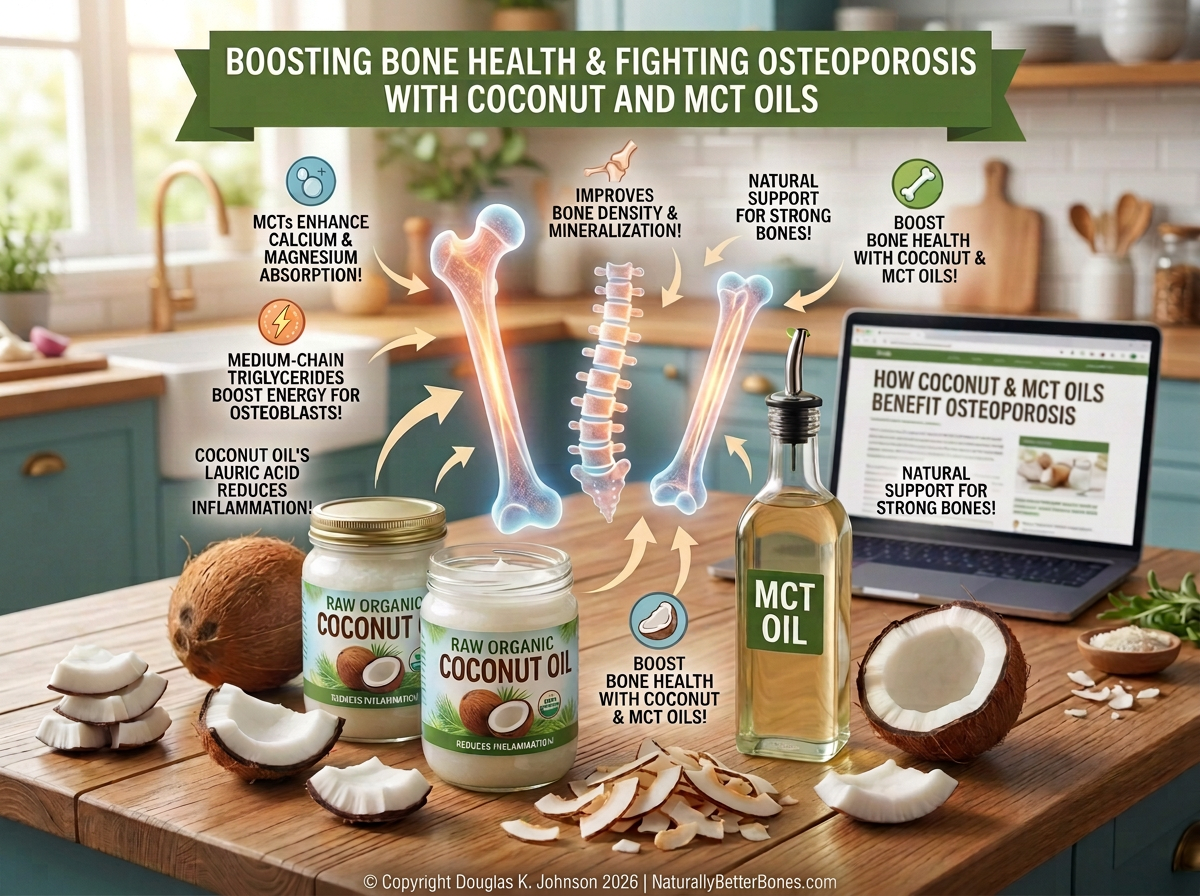
Virgin coconut oil (VCO), especially, shows promise in animal studies for supporting bone structure and reducing osteoporosis-related bone loss, largely through antioxidants and medium-chain triglycerides (MCTs), though human clinical evidence remains limited and pure MCT components have mixed or concerning findings in some research.
Osteoporosis is a progressive condition marked by reduced bone mass, deteriorated microarchitecture, and higher fracture risk. It is especially common after menopause due to estrogen decline in women, which increases oxidative stress and bone resorption. While nutrition and proper exercise form the standard approach, interest has grown in dietary fats like coconut oil and MCT oil as potential supportive options.
What Are Coconut Oil and MCT Oil?
Coconut oil is rich in saturated fats, particularly lauric acid (C12) and other medium-chain fatty acids. Virgin coconut oil (VCO) is minimally processed and retains more polyphenols and antioxidants than refined versions. MCT oil is a concentrated extract, typically high in caprylic (C8) and capric (C10) acids, which are rapidly absorbed and metabolized for energy.
Evidence from Animal Research on Bone Health
Several studies in rodent models of osteoporosis (often ovariectomized rats mimicking postmenopausal estrogen deficiency) report protective effects from VCO:
- In one key study, ovariectomized rats given 8% VCO in the diet for six weeks showed significantly greater bone volume and trabecular number, with lower trabecular separation, compared with untreated ovariectomized controls. Bone structure was better preserved and closer to that of sham-operated (non-ovariectomized) animals. VCO outperformed calcium supplementation alone in some histomorphometric measures. 1
- A related study found VCO reduced markers of lipid peroxidation (such as malondialdehyde) in bone tissue while increasing antioxidant enzyme activity (e.g., glutathione peroxidase). This supports the idea that VCO’s polyphenols help counter oxidative stress, a driver of bone loss. 2
- Additional work showed VCO helped reverse osteopenia induced by high-refined-carbohydrate diets in mice, improving trabecular bone parameters, bone mineral density in several sites, and alveolar bone metrics, partly by lowering the RANKL/OPG ratio (favoring less bone resorption). 3
- Combinations of VCO with tocotrienol-rich fraction (a form of vitamin E) further supported bone formation markers and biomechanical strength in ovariectomized, high-fat-diet models. 4
Osteoclasts, the only cells definitively shown to degrade bone, produce enzymes, the primary of which is acid phosphatase, which dissolves both the organic collagen and inorganic calcium and phosphorus of the bone in the remodeling process. This creates reactive oxygen species, which act as free radicals. These oxygen molecules are highly unstable and can damage bones by destroying bone tissue and causing the death of the bone cells. The antioxidant properties found in coconut oil offer protection against the further breakdown of bone tissue. 5 6
Proposed mechanisms include antioxidant protection against free-radical damage to bone cells, possible support for calcium absorption via saturated fats/MCTs, anti-inflammatory effects, and modulation of bone-remodeling pathways. Lauric acid and polyphenols in VCO appear central to these benefits in the animal data.
MCT Oil: More Nuanced Picture
MCT oil shares some of the medium-chain fats found in coconut oil and is valued for energy metabolism and other uses. However, evidence specifically for pure C8/C10 MCTs and bone health is less consistent and sometimes cautionary:
- Some older or related work links MCTs to better calcium absorption in certain contexts.
- More recent rodent studies examining the primary components of MCT ketogenic diets (octanoic/caprylic and decanoic acids) found they did not reverse age-related or chemically induced bone loss and, in some cases, worsened trabecular microarchitecture, bone mineral density, and related parameters even in healthy animals. 7
These findings suggest that isolating high doses of C8 and C10 may not confer the same bone benefits observed with whole VCO (which also contains lauric acid, polyphenols, and other compounds). Human data specifically linking MCT oil supplementation to improved bone density or osteoporosis outcomes are scarce.
Practical Considerations and Limitations
Most positive data come from animal models. Robust, long-term randomized controlled trials in humans with osteoporosis or osteopenia are lacking. Benefits observed with VCO may not fully translate, and individual responses can vary based on overall diet, age, hormone status, and lifestyle.
People with digestive sensitivity may experience gastrointestinal upset from higher MCT doses. When beginning the use of MCT oil, it is advised to start with small servings such as 1 tsp and work up to larger amounts.
Bottom Line
Virgin coconut oil shows encouraging results in preclinical models for preserving bone microarchitecture and countering oxidative stress linked to osteoporosis, likely thanks to its unique mix of MCTs, lauric acid, and antioxidants. Pure MCT oil has less clear (and in some recent animal work, potentially unfavorable) effects on bone when isolated. These oils may serve as a complementary dietary element within a broader bone-healthy lifestyle, but stronger human evidence is needed before they can be recommended as treatments. Prioritize evidence-based foundations—nutrition, movement, and medical care—while watching for future clinical research on coconut-derived fats and skeletal health.
This is a page from “Opening the Doors to Reversing and Healing Osteoporosis“.
© Copyright 2020, 2026 Douglas K. Johnson, all rights reserved
Sources & Citations:
- Pmc.ncbi.nlm.nih
- Ncbi.nlm.nih
- https://www.mdpi.com/2304-8158/11/18/2800
- Veterinaryworld
- https://pmc.ncbi.nlm.nih.gov/articles/PMC4119859/
- https://www.britannica.com/science/osteoclast
- Ibroneuroreports
Other Sources:
https://pmc.ncbi.nlm.nih.gov/articles/PMC3426286/
https://healthyy.net/superfoods/6-benefits-of-coconut-oil-in-osteoporosis

