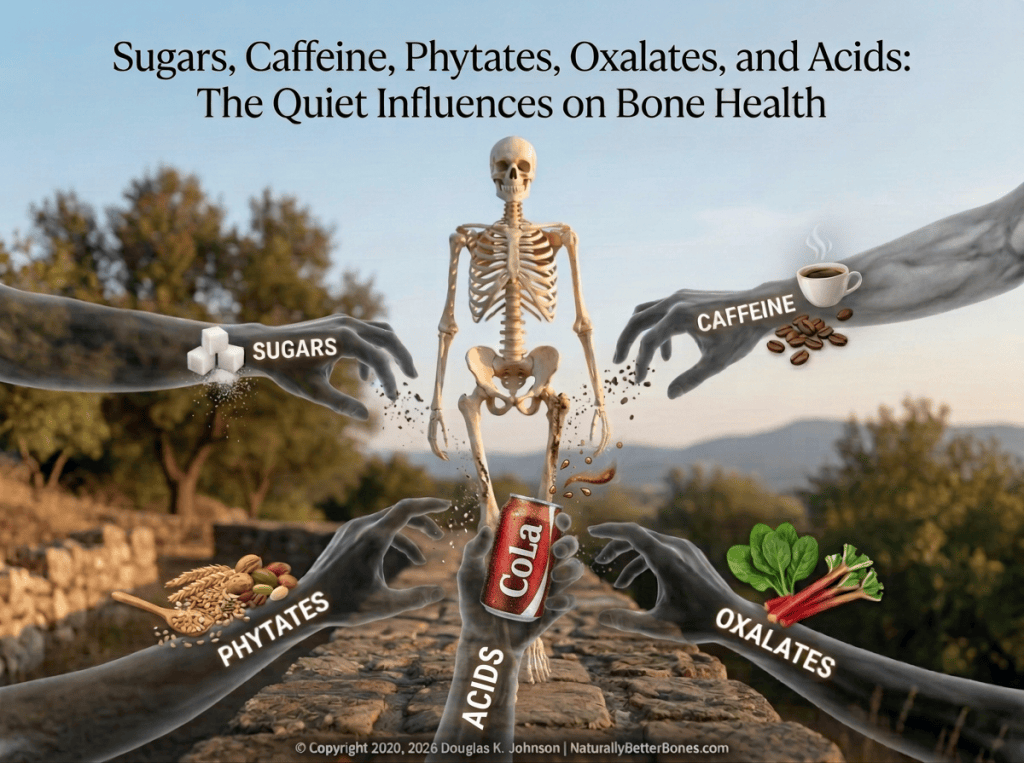
Sugars, Caffeine, Phytates, Oxalates and Acids: The Quiet Influences on Bone Health
Strong bones depend on more than just calcium and vitamin D. A balanced diet supplies the minerals and supporting nutrients that help maintain bone density throughout life. Certain everyday foods and drinks, however, can interfere with calcium absorption or increase its loss when consumed, mostly due to excess, though less than excess is not always the rule. In some cases, even seemingly insignificant amounts can do harm, especially with sugar and caffeine. For people concerned about osteoporosis or osteopenia, understanding the roles of sugars, caffeine, phytates, and oxalates offers practical ways to protect bone health.
This article focuses on these five factors. The goal is clarity and realistic guidance through awareness. Some of these foods and compounds are not inherently harmful in moderate amounts and often come packaged with beneficial nutrients. Problems arise especially with frequent overconsumption or when they displace sources bone-supporting nutrients or hinder them for hours, which can affect more than the benefits of just one meal and/or supplementation.
Natural as well as added Sugars and Sugary Beverages: Empty Calories That Crowd Out Bone Support
Diets high in sugars, especially added sugars, often lack the nutrients bones need most—vitamins C, D, and K2, calcium, magnesium, boron, zinc, and others. When sweets, pastries, candy, sugary cereals, and sweetened drinks dominate, people tend to consume fewer nutrient-dense foods. Over time, this pattern can leave bones short of the building blocks required for maintenance and repair. However, it is not always excess or frequency; as sugar hinders vitamin C by 75% for six hours, the less the better, or in some cases, avoidance is best, at least during the time one expects to receive the benefits of food and supplements. Since many nutrients such as collagen, magnesium, calcium, iron, and other minerals need whole-food vitamin C to work, the need for unobstructed vitamin C is crucial. 1 2 3 4 5
Research links higher intake of sugar-sweetened beverages with poorer bone outcomes. Observational studies have associated regular soda consumption with lower bone mineral density and elevated fracture risk, particularly in postmenopausal women. One analysis found that each additional daily serving of soda corresponded to a higher chance of hip fracture. The concern is strongest with cola-type drinks, which combine sugar (or artificial sweeteners) with phosphoric acid. Phosphoric acid may alter the body’s calcium-phosphorus balance, prompting greater calcium mobilization from bone in some contexts. 6 7 8
Sugar itself does not directly dissolve bone, but chronically high sugar intake can promote low-grade chronic inflammation and interfere with mineral handling. Ultra-processed foods rich in added sugars frequently replace milk, yogurt, and leafy greens that supply readily available calcium. Children and adolescents who drink large amounts of sugary beverages in place of milk may build less peak bone mass, setting the stage for later vulnerability. 9
Practical steps are straightforward. Choose water, sparkling water, herbal or unsweetened tea, or other non-sweetened beverages. When craving something sweet, pair fruit like apples, pears, or blueberries with a source of protein or healthy fat to slow absorption and add nutrients. Reading labels helps identify hidden sugars in sauces, yogurts, packaged snacks, and processed foods. Reducing overall added sugar intake frees room in the diet for foods that actively support bone matrix and mineralization.
One should also be aware that it is not just “sugar” as in table sugar or added sugar that can be problematic. Sugar in fruits, honey, etc., also poses the same issue, compromising vitamin C and mineral absorption and availability. Foods that quickly turn to glucose in the blood have the same effect.
Caffeine: Modest Effects That Matter Most and More So at High Doses
Coffee, tea, and energy drinks are daily rituals for many people. Caffeine can increase urinary calcium excretion, especially at higher intakes. A controlled study showed that roughly 800 mg of caffeine (equivalent to six to eight strong cups of coffee consumed over several hours) nearly doubled calcium loss in urine. At more typical levels—one to three cups of coffee per day—the effect is smaller and may be offset by adequate calcium intake from food or supplements.
Moderate caffeine consumption is generally considered safe for bone health. Some large observational studies even report neutral or slightly favorable associations with moderate coffee or tea intake, possibly because of beneficial plant compounds such as polyphenols. While risk rises primarily with very high intake combined with low calcium consumption, keep in mind that caffeine has more of an effect than many believe. Energy drinks, which can deliver large caffeine doses along with sugar or other additives, warrant extra caution. But it goes beyond this.
Many sources suggest people with osteoporosis risk factors or low dietary calcium may benefit from limiting total caffeine to roughly 300–400 mg per day (about three to four average cups of coffee) or less. However, the obstruction of calcium is not the only issue with caffeine. Caffeine hinders the absorption of vitamins C and D and some B vitamins. It is also known to hinder several minerals like calcium, iron, and magnesium. Because it is also a diuretic, it drains minerals from the bones and body after they’ve already been obtained. Any caffeine intake will have an effect on vitamin and mineral absorption for up to 10 hours. 10 11
Phytates: Natural Compounds That Bind Minerals
Phytates (phytic acid) occur naturally in many plant foods, including whole grains, bran, legumes, seeds, nuts, and some cereals. They can bind minerals such as calcium, iron, zinc, and others in the digestive tract, reducing absorption from the same meal or supplements taken around the same time. This effect has led some sources to label phytate-rich foods as problematic for bone health. 12 13
The picture may be slightly more nuanced. These same foods deliver fiber, protein, healthy fats, magnesium, and other nutrients that support overall health and, indirectly, bone quality. Population studies in some parts of the world of people who eat high-phytate diets (for example, traditional whole-grain and legume patterns) do not consistently show higher rates of osteoporosis when the overall diet is balanced. Of course, these studies don’t show the effects of GMOs, Glyphosate, and other chemicals that are applied to the majority of these food crops. Soaking, sprouting, fermenting, and cooking legumes and grains lower phytate levels somewhat but do not eliminate the majority of this antinutrient.
Eating a large amount of concentrated wheat bran or unsoaked legumes together with a primary calcium source can reduce calcium uptake from that meal. People relying heavily on plant-based diets should ensure adequate total calcium from lower-phytate sources such as kale, bok choy, broccoli, or almonds in moderate amounts. Spreading phytate-rich foods across the day rather than concentrating them with calcium-rich meals may help. Eliminating phytates may not seem practical to some, yet many have done well with diets void of such foods. Taking a phytase supplement can help reduce the phytic acid, though not entirely.
Oxalates: Binding Agents in Certain Vegetables and Plant Foods
Oxalates (oxalic acid) are another group of naturally occurring compounds found in spinach, rhubarb, beet greens, Swiss chard, certain nuts, cocoa, black tea, and some other plant foods. Like phytates, oxalates can bind calcium in the gut and form insoluble complexes that limit absorption. Spinach, for instance, contains calcium, but much of it is bound by oxalate and poorly absorbed compared with the calcium in low-oxalate greens. Oxalates also bind to other minerals like iron, magnesium, etc. 14
This does not necessarily mean these foods should be avoided altogether, and oxalates are almost impossible to avoid aside from following a strict carnivore diet. While the foods with oxalic acid can provide valuable vitamins, antioxidants, and fiber, it is best to choose a low-oxalate choice of foods. The oxalic acid can be reduced in some cases by boiling, fermenting, or sprouting. Relying on high-oxalate greens as the main or only vegetable source of calcium is inefficient. Better low-oxalate options for calcium include kale, collard greens, bok choy, broccoli, and turnip greens. Cooking can reduce soluble oxalate content in some vegetables. Pairing high-oxalate foods with calcium-rich foods in the same meal is less ideal if calcium absorption is a priority; spacing them apart can improve utilization.
For most people eating a varied diet, oxalate effects are minor. Individuals with a history of calcium-oxalate kidney stones may see more reason to avoid foods with them or be more aware to maintain a low-oxalate diet, but that is a separate consideration from general bone health. The stronger point remains with consistency in calcium intake from well-absorbed sources, such as fish, especially canned fish with bones and canned in oil like salmon and sardines. Unlike phytates, oxalates have no enzyme to offset their effects.
Acids: The Bone Disintegrating Agent In Foods and Supplements
Another influence on bone health is acids. While several can factor in, one of the primary acids is phosphoric acid found in sodas, as well as some foods and supplements. Sodas and some beverages are loaded with phosphoric acid, which is said to be a cause of osteoporosis as it leaches minerals from the bones. Studies suggest that high intake of cola drinks is associated with a 4% decrease in bone density, especially in women. 15 16 17 Acids create acidity, and acidity causes buffering, which leads the kidneys to pull minerals from the bones, thus diminishing bone mineral density (BMD). 18 19
Putting It Together: A Practical Approach for Bone Support
Focusing on sugars, caffeine, phytates, oxalates, and acids does not require a diet void of all good foods. Instead, it encourages awareness and small, sustainable shifts for the most part with a few avoidances that cause the most harm.
- Limit or avoid sugary drinks, foods, and ultra-processed sweets so that calcium-rich and nutrient-dense foods take center stage. At least consider the timing of the intake of such beverages and foods to keep sugar intake six hours prior to and several hours after any intake of key nutrients affected by sugar.
- Avoid or keep caffeine moderate and properly timed to ensure optimal calcium and mineral intake to meet daily needs.
- Consider soaking or sprouting, or buying sprouted nuts and seeds for their benefits in reducing phytates and balancing them with good calcium sources. Also consider taking a phytase enzyme to improve bioavailability.
- Choose lower-oxalate greens more often for calcium contributions and make attempts to maintain a lower oxalate diet.
- Prioritize variety: fish with bones, especially canned; a range of vegetables, low-sugar fruits, and adequate protein all contribute to a bone-supportive pattern.
Bone health is cumulative. Peak bone mass is largely established by early adulthood, but diet and lifestyle continue to influence the rate of bone loss later in life. Combining thoughtful food choices with weight-bearing exercise, adequate vitamin D intake from sunshine and food, not smoking, and limited alcohol creates the strongest foundation. Anyone with diagnosed osteoporosis, osteopenia, or significant risk factors should work with a natural healthcare provider for individualized guidance, including possible supplementation.
By reducing sugar intake, especially excess added sugars, limiting or avoiding caffeine, understanding how phytates and oxalates interact with minerals, and avoiding harmful acids, people can support their bones without completely sacrificing all enjoyment or nutritional variety. Small, consistent adjustments often yield the most lasting benefits.
Conclusion
Bone health is shaped by the everyday choices we make at the table. Sugars and sugary drinks can quietly displace the nutrients bones rely on, caffeine intake can increase vitamin and mineral losses or rob the body after absorption, and natural compounds like phytates and oxalates can significantly reduce mineral absorption if not monitored, and acids can diminish bone density. Most of these factors may not demand perfection, but your bones will thank you for any moderation and, in some cases, elimination or at least considerable restriction and proper timing of the intake of some foods. Invite a mindset of greater awareness and simple refinements that protect bone density over the long term.
A diet rich in well-absorbed nutrients, supported by limited or lack of caffeine use, decreased sugars, and smart preparation of plant foods, works alongside movement, vitamins and minerals, and healthy lifestyle habits to slow bone loss and reduce fracture risk. Knowledge alone is powerful, but consistent action turns that knowledge into stronger bones and greater confidence in daily life.
Call to Action
Take the next step today. Review your typical diet, daily drinks, and snacks—could one sugary beverage be swapped for water or a healthier alternative? Might an extra cup of coffee be replaced with herbal tea a few times a week or even daily? Experiment with soaking or sprouting nuts and seeds or choosing lower-oxalate greens alongside your calcium and other mineral sources. Track these small changes for two weeks and notice how easily they fit into your routine.
If you are managing osteoporosis or osteopenia, share this information with your natural healthcare provider and ask how these insights apply to your personal plan. Follow our osteoporosis support group or community discussions to exchange practical tips, recipes, and encouragement with others on the same journey. Explore the full resources in the Naturally Better Bones groups or “Opening the Doors to Reversing and Healing Osteoporosis” book for deeper strategies on nutrition, exercise, and lifestyle that build lasting bone strength.
Your bones respond to what you do consistently. Start with one adjustment this week, build from there, and give yourself the gift of stronger, more resilient bones for years to come.
This is a page from “Opening the Doors to Reversing and Healing Osteoporosis“.
© Copyright 2020, 2026 Douglas K. Johnson – All rights reserved
Sources and Citations:
- https://toyourhealth979994037.wordpress.com/2017/04/02/ever-met-identical-twins-vitamin-c/
- https://www.thepaleomom.com/5-nutrients-youre-deficient-in-if-you-eat-too-much-sugar/?fbclid=IwAR3HTKvTzWhSSoaqM4k013Oesp-sU9asmd0Us2-Pt1RX9cbMgMRiScs3BDY
- http://vitaminc.foundation/forum/viewtopic.php?t=9820
- https://www.thepaleomom.com/5-nutrients-youre-deficient-in-if-you-eat-too-much-sugar/
- https://www.hammernutrition.com/blog/high-sugar-intakes-negative-impact/
- https://www.researchgate.net/publication/387074988_The_Impact_of_Soft_Drink_Consumption_on_Bone_Health
- https://www.health.harvard.edu/bones-and-joints/do-carbonated-drinks-weaken-bones-or-worsen-osteoporosis
- https://blog.mercy.com/carbonated-drinks-and-your-bones/
- https://www.sciencedirect.com/science/article/pii/S0271531701003244
- https://naturallybetterbones.com/caffeines-effects-on-nutrients/
- https://www.livestrong.com/article/294664-diuretic-effects-of-caffeine/
- https://www.livestrong.com/article/291119-what-foods-block-calcium-absorption/
- https://www.ncbi.nlm.nih.gov/pmc/articles/PMC4325021/
- https://pdf.benchchem.com/1200/The_Impact_of_Oxalates_on_Mineral_Bioavailability_A_Technical_Guide.pdf
- https://www.livestrong.com/article/447824-how-acids-affect-calcium-in-the-teeth-bones/
- https://www.brgeneral.org/news-blog/2022/november/these-3-drinks-can-affect-your-bones
- https://blog.mercy.com/carbonated-drinks-and-your-bones/
- https://www.ncbi.nlm.nih.gov/pubmed/8202051?dopt=Abstract&fbclid=IwAR1hrDN2olDHeAMzesB1LhqNlpJ_-BBKxUwmQ03_STK0vPyxf905QBaD_jk
- https://www.anaesthesiamcq.com/AcidBaseBook/ab2_2.php

