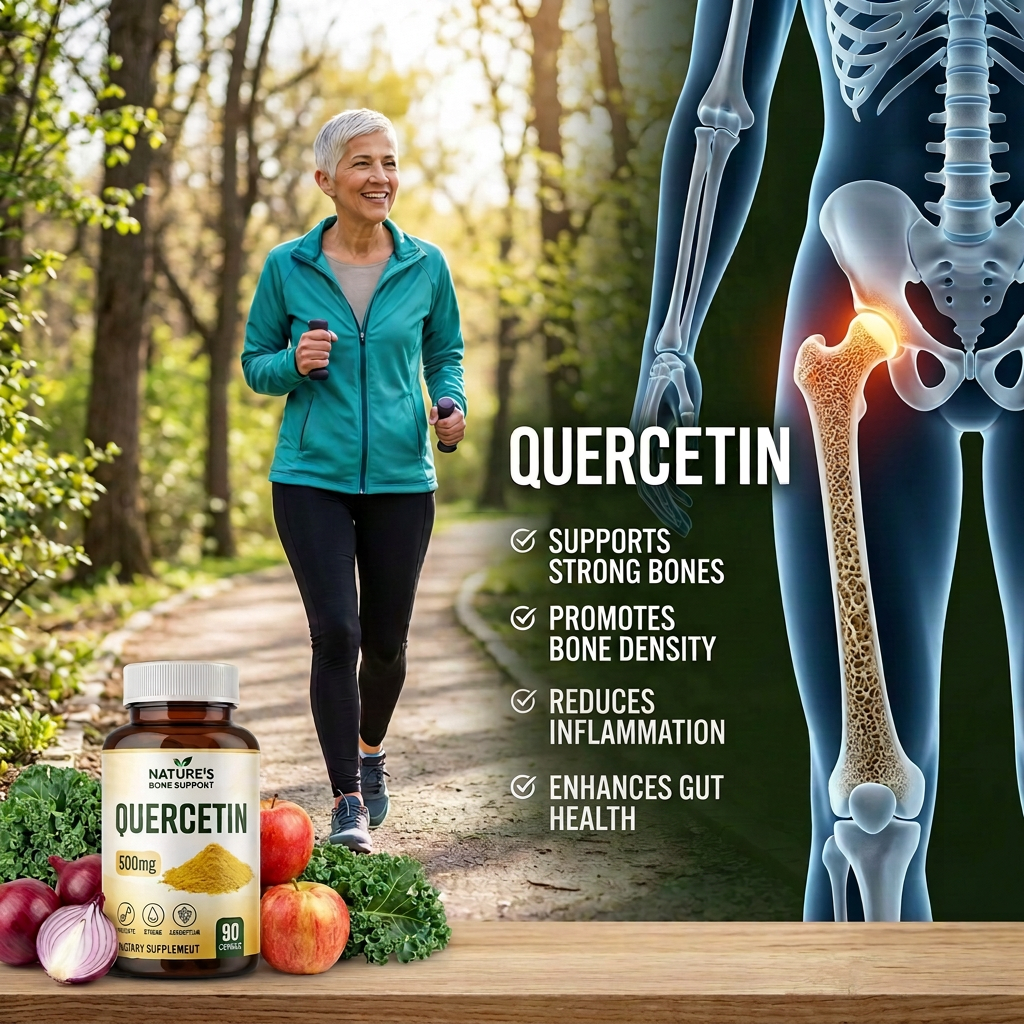
Quercetin shows promising potential for supporting bone health and counteracting osteoporosis-like bone loss based primarily on preclinical (cell and animal) evidence. 1
First, Quercetin supports gut health primarily through prebiotic-like effects on the microbiota, strengthening of the intestinal barrier, increased production of beneficial metabolites, and anti-inflammatory/antioxidant actions in the gut. Most evidence comes from animal and cell studies (with some supporting human-relevant mechanisms). This has been shown to benefit gut health through the modulation of gut microbiota in prebiotic effects, helping to restore microbial balance – reducing dysbiosis, a known cause of osteoporosis. It boosts Short-Chain Fatty Acids (SCFAs), aiding better colonic conditions. Quercetin also strengthens the Intestinal Barrier and helps to reduce, maintain, or repair gut barrier integrity, reducing “leaky gut” (also known to cause and exacerbate osteoporosis. It limits the translocation of bacterial products into the bloodstream. These gut effects may also contribute to broader benefits (e.g., improved metabolic health, reduced systemic inflammation, or influences on the gut-liver axis).
Quercetin also shows promising potential in directly supporting bone health and counteracting osteoporosis-like bone loss based primarily on preclinical (cell and animal) evidence, although human clinical data remain limited. 1
Reviews highlight its multi-target effects on bone remodeling:
- It promotes bone formation by stimulating osteoblast differentiation and activity (via pathways such as Wnt/β-catenin, BMP/SMAD/RUNX2, and others) and supporting bone marrow mesenchymal stem cells.
- It inhibits bone resorption by suppressing osteoclastogenesis (e.g., via RANKL/RANK/OPG axis, NF-κB).
- Additional benefits include antioxidant effects (reducing oxidative stress), anti-inflammatory actions, and sometimes estrogen-like or anti-apoptotic influences that help maintain bone homeostasis. 2
Most research has been limited to preclinical evidence from cell and animal studies, but some human evidence is available. One small double-blind, placebo-controlled trial in 33 healthy postmenopausal women tested 500 mg quercetin daily for 90 days. The study showed quercetin increased bone formation markers (osteocalcin and PINP) and reduced some pro-inflammatory cytokines (IL-6, TNF-α) compared with a placebo. The bone resorption marker CTX also rose (within normal ranges), while BMD and body composition/physical function were unchanged. The authors concluded it may help regulate a normal bone turnover cycle via formation support and reduced inflammation—but it is unclear whether it protects against future bone loss. Larger, longer trials with optimized formulations and fracture or BMD outcomes are needed. 3
Practical Considerations
- Dietary sources are safe as part of a balanced diet and may contribute modestly to overall flavonoid intake associated with better health.
- Supplements (often 500 mg doses in studies) face bioavailability challenges; enhanced forms (e.g., phytosome, nanoparticles) are being explored.
- Safety in the studied short-term human trial appeared acceptable, and animal work has not shown major toxicity at relevant doses, but long-term human safety data specifically for bone outcomes are limited.
In summary, quercetin is a promising natural compound with solid preclinical support for bone-protective effects that could help with bone health and osteoporosis-related processes, but evidence in people is preliminary.
Quercetin is a flavonoid (flavonol) found in many fruits, vegetables, and plants (e.g., onions, apples, berries, tea).
Foods Highest in Quercetin
Approximate content (mg per 100 g edible portions):
| Food | Approximate Quercetin (mg/100 g) | Notes |
|---|---|---|
| Capers (raw or canned) | 170–234 | Highest known natural source; used in small amounts as a condiment |
| Lovage leaves | ~170 | Herb; less commonly eaten in large quantities |
| Dill, cilantro (coriander leaves), oregano, fennel leaves | 30–80+ | Herbs; high concentration but typically used sparingly |
| Red onions (raw) | 20–40+ | One of the most practical everyday sources; higher in outer rings |
| Yellow/white onions | 5–20 | Lower than red varieties |
| Kale, radicchio, watercress, asparagus | 15–30 | Leafy greens and vegetables; good regular sources |
| Cranberries*, elderberries, blueberries, lingonberries*) | 8–25+ | Berries are solid contributors |
| Hot chili peppersǂ (certain varieties) | 15–50 | Varies by type and color |
| Apples (with skin) | 2–5+ (higher in skin) | Eat the peel for more; common dietary contributor |
| Broccoli, leafy lettuces | Lower single-digit to teens | Contribute in a varied diet |
| Green/blackϫ tea (brewed), red wine (organic only) | A few mg per serving | Cumulative with regular intake |
Other contributors include shallots, plums*šϫ (especially darker ones), cherries*š, and certain spices. A plant-rich diet emphasizing onions, apples (with peel), leafy greensϫ, asparagus, and herbs will meaningfully raise intake.
Typical and Beneficial Amounts
- Average dietary intake: Most people get roughly 10–50 mg per day from food (estimates range from about 5–100 mg depending on diet; higher in Mediterranean-style or high-fruit/vegetable patterns). Heavy consumers of onions, apples, berries, and greens can reach higher levels (potentially toward a few hundred mg in extreme cases).
- No official Recommended Dietary Allowance (RDA) exists specifically for quercetin.
- In research/supplements: Clinical studies commonly use 500–1,000 mg per day (often divided doses) for periods of weeks to a few months. These amounts far exceed typical food intake and are the levels most often studied for potential effects on inflammation, blood pressure, or other outcomes. Lower doses (e.g., 250–500 mg) appear in some general wellness contexts.
- Food sources provide quercetin mainly as glycosides (which may have somewhat better absorption than the aglycone form in many supplements). Absorption improves when consumed with dietary fats or certain compounds (e.g., some formulations pair it with vitamin C or bromelain).
Practical advice: Focus on whole foods first—regularly include red onions, apples with skin, berries+, kale/asparagus, and herbs/spices. This supports overall flavonoid and nutrient intake alongside quercetin. Supplements can provide higher, more consistent amounts if desired, but discuss them with a natural healthcare provider (especially if you take medications, as interactions are possible). Long-term safety data for high supplemental doses (>1,000 mg daily) are more limited than for short-term use.
+Berries should be limited to blueberries and elderberries, which are lowest in citric acid
Values are approximate averages; check specific product labels or lab analyses for precise amounts when relevant.
This is part of Opening the Doors to Reversing and Healing Osteoporosis
© Copyright Douglas K. Johnson 2026 – All rights reserved
Sources and Citations:
- link.springer.com/article/10.1186/s13287-026-05002-8
- https://pmc.ncbi.nlm.nih.gov/articles/PMC12581364/
- https://pmc.ncbi.nlm.nih.gov/articles/PMC11084538/
* Contains citric acid that can lead to buffering
ǂNightshade (creates inflammation)
š High in sugar (counters vitamin C and minerals)
ϫ Contains oxalates


Thank you. Very good to know! Linda
LikeLike